A camera can be technically operational while its recording remains unhelpful. The most common reason is not the equipment itself but a position that was never tested in different conditions.
A position that is too high or too wide
A very high camera may show movement well but capture poor facial detail. An overly wide view spends useful pixels on walls, sky or areas that do not matter.
Every camera should have a defined purpose and its view should be checked at the distance where an important event is expected.
Light working against the camera
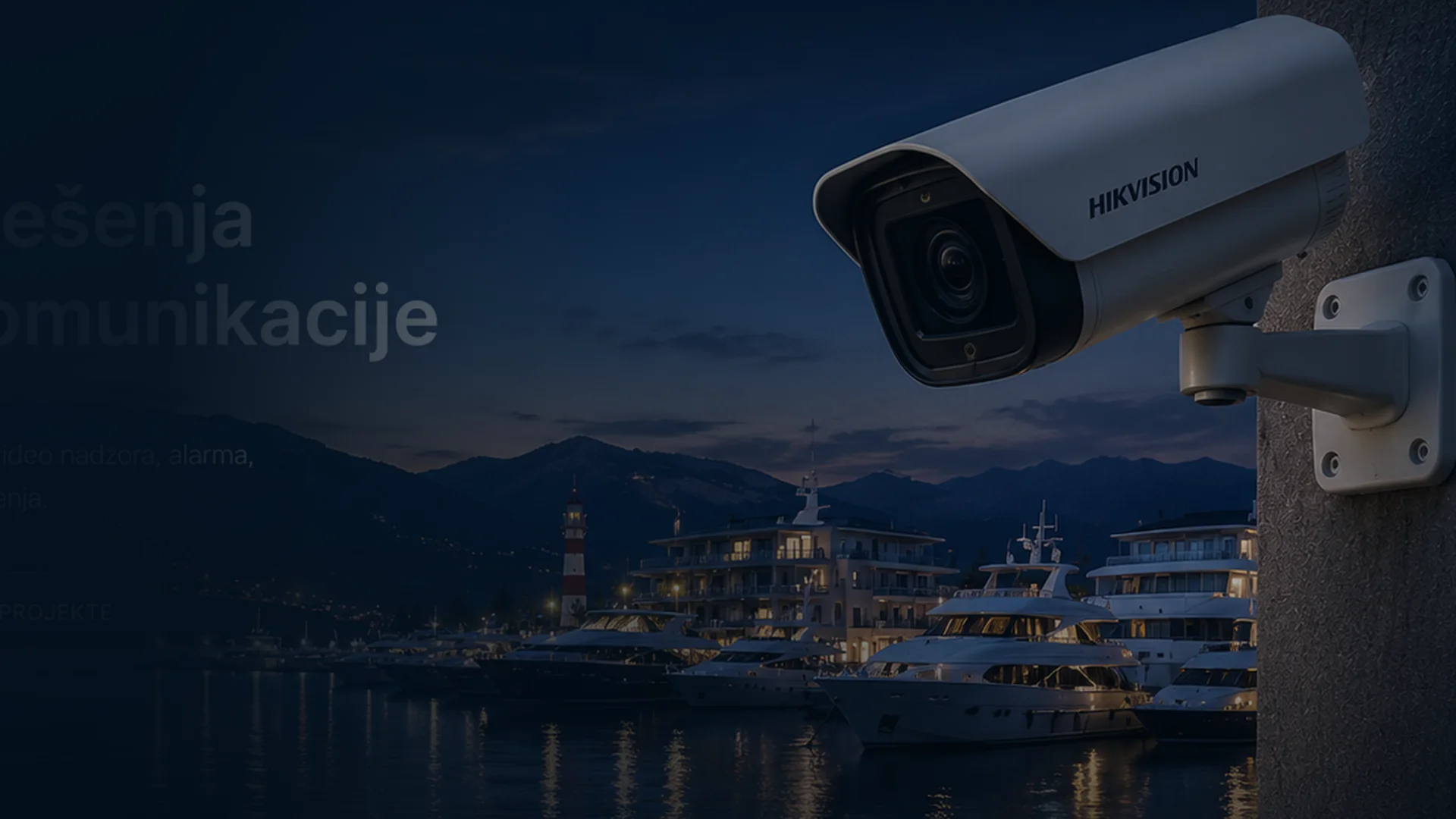
Strong spotlights, headlights, sun behind an entrance or reflected infrared light can transform the night image. Cobwebs, canopies or walls too close to the lens can also produce glare.
All Safe D.O.O. therefore checks more than daytime images. Critical positions are tested at night and under real lighting conditions.
- Avoid unnecessary strong light in the lens
- Avoid surfaces that reflect night illumination
- Plan weather protection without blocking the view
- Keep safe access for cleaning and service
Neglected cabling and maintenance
Unprotected connections, unlabelled cables and overloaded power supplies complicate servicing and may cause interruptions. The recorder also needs a secure, ventilated and controlled location.
Clean installation is part of a reliable system. The All Safe D.O.O. team documents positions and verifies recording, time, alerts and access before handover.